- The Blueprint
- Posts
- Why the housing market is swinging toward buyers
Why the housing market is swinging toward buyers
Plus, where Americans moved to in 2025

Rinku Mathew
February 03, 2026

Leverage is shifting
As you’ll see in today’s top stories, for the first time in years, the housing market is giving buyers real bargaining power.
But leverage alone doesn’t close deals. Only agents who communicate well can capitalize on it.
So, in today’s Foundation Plans, we focus on how you can spark conversations that feel personal and worthy of engagement, even in our hyper-digital and social-media-driven world.
Agents who can communicate real knowledge with authenticity have an invaluable superpower.
With that, let’s jump into today’s Blueprint.
- David
Homebuyers are scoring the biggest discounts in 13 years
Source: Redfin
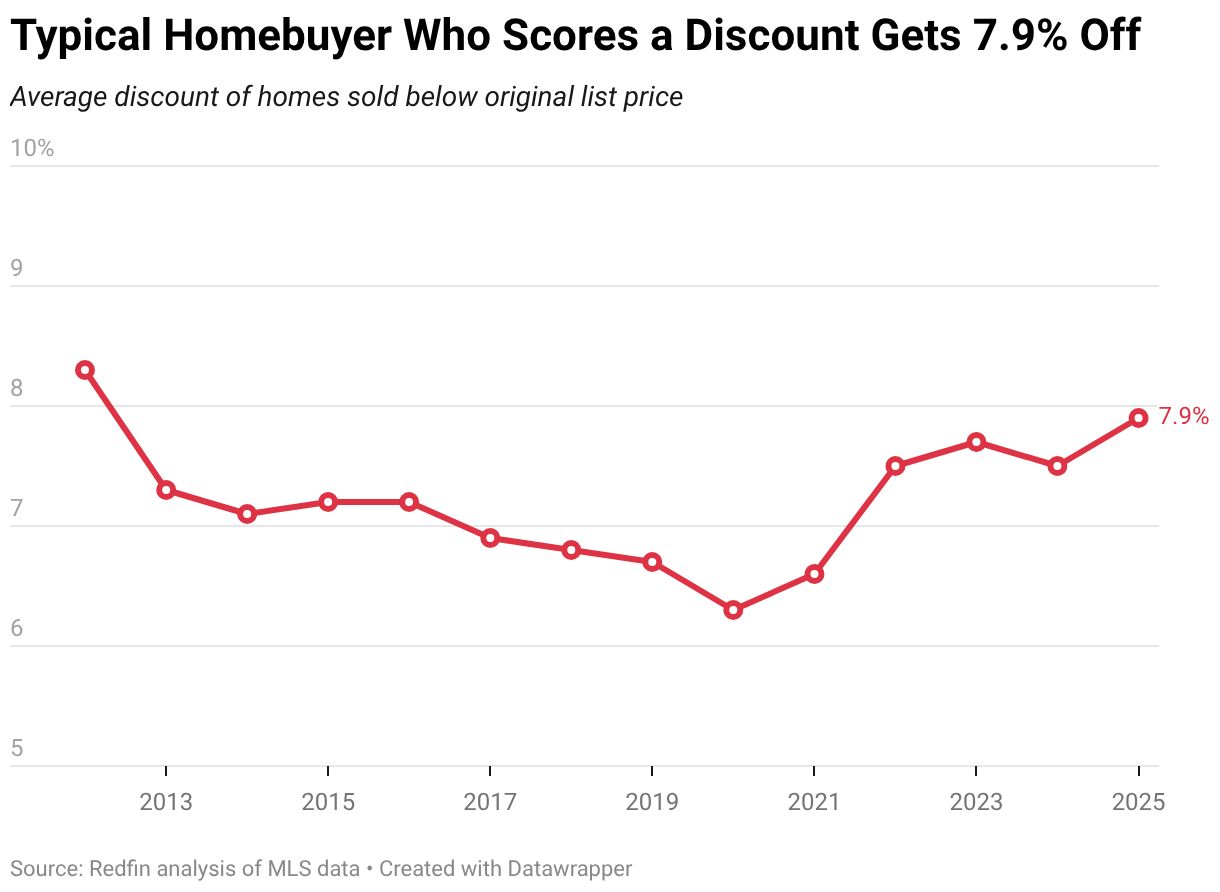
Homebuyers are getting concessions and discounts from sellers at the highest rate in years. In 2025, 62% of buyers purchased a home below the original listing price. According to Redfin, that was the highest share since 2019. For context, at the peak of the pandemic boom in 2021, just 38% of homes sold below list, as bidding wars pushed prices higher and erased buyer leverage.
Here are the key takeaways from Redfin’s update:
The average discount on homes that sold below list price was roughly 8%, the largest since 2012.
One in four buyers who negotiated a discount secured 10% or more off the asking price—a 13-year high.
Across all homebuyers (not just those who paid below list), the average discount was $15,196, or 3.8%.
Condo buyers are seeing the most price pressure: those who paid below list scored an average 8.1% discount, compared with 6.5% for townhome buyers.
Buyers are also extracting non-price concessions, including seller credits for closing costs or mortgage-rate buydowns.
Southern markets, where new-home construction has materially expanded supply, are the most buyer-friendly.
Buyers were least likely to get discounts in supply-constrained markets such as Newark, San Francisco, and San Jose
My take
Leverage really has shifted towards buyers, but execution matters. Buyers can negotiate again, and sellers who meet the market are still moving homes. Agents who price honestly, coach clients through concessions, and keep deals clean will outperform those stuck in a 2021 mindset. In this market, the best outcomes go to agents who manage expectations early and stay disciplined through negotiations.
    |
Apartment rents just dropped to their lowest level in 4 years

Source: Unsplash
Apartment rents continued their slide into the new year. The national median rent in January fell to $1,353, down 1.4% year over year. According to CNBC, that is the largest annual drop since September 2023 and the lowest January rent level since 2022. Here’s what else stands out:
Rents are now 6.2% below their peak from the summer of 2022
The national vacancy rate rose to 7.3% in January, the highest reading on record since 2017
Apartments are taking an average of 41 days to lease, four days longer than a year ago, and a new record high
While the wave of new apartment construction has peaked, a substantial amount of supply is still moving through the pipeline
Austin posted the steepest annual decline, with median rents down 6.3%, followed by New Orleans, San Antonio, Tucson (AZ), and Denver
Virginia Beach led the nation in rent growth, with median rents up 5%, followed by San Jose, San Francisco, Chicago, and Providence, Rhode Island.
My take
We’re in the business of selling homes, but this story is too important to ignore. It reinforces a point we’ve been hammering for years: when supply increases, affordability improves. The surge in apartment construction has pushed vacancies to record highs, stretched lease-up times, and driven rents down from their pandemic peak. Even as new supply crests, the remaining pipeline is still pressuring prices. The apartment market is a real-time case study in how adding housing works—more units mean more competition, less pricing power, and better outcomes for renters. The same logic applies to homebuyers, too.
| |
Where Americans moved in 2025

Source: Unsplash
In 2025, South Carolina, Idaho, and North Carolina led the country in net domestic migration, according to a newly released report from the U.S. Census Bureau. Net domestic migration measures how many people move into a state from elsewhere in the U.S., minus those who leave.
States with the strongest gains tended to have a better balance between home prices, household incomes, and new construction — making them more affordable and easier places to stay or relocate to.
Lifestyle factors also played a key role. Many movers cited remote work flexibility, being near family, retirement plans, political preferences, and overall quality of life as key motivations.
Here are the states that saw the biggest net in-migration and net out-migration:
In-Migration | Out-Migration |
My take
People aren’t just chasing sunshine anymore — they’re chasing balance. In 2025, states that paired affordability with sufficient housing supply pulled ahead, while high-cost, supply-constrained states continued to lose residents. Even the pandemic’s biggest winners are cooling: Florida and Texas are still growing, but migration has fallen sharply from its 2022 peak. The takeaway is simple: affordability has overtaken lifestyle appeal as the decisive factor.
| |
Schematics
The news that just missed the cut

Source:
Foundation Plans
Advice from David to win the day
Most agents treat email like a megaphone, blasting out listings, stats, or neighborhood highlights. The problem? Buyers already get faster, cleaner versions of that information from portals and apps. What they don’t get is a genuine, human connection. If you want your emails to stand out, the key isn’t more data; it’s sparking conversations that feel personal and worthy of engagement. Today, we’d like to give you some tips on how to do that.
1. Lead with simple, human questions – Instead of long newsletters or “just listed” announcements, start with short, low-stakes questions like, “Are you still interested in buying a home in [city]?” These are easy for buyers to answer with a quick yes or no, lowering the psychological barrier to engagement. The goal isn’t to overwhelm with information, but to create an opening for dialogue that feels natural and pressure-free.
2. Map your responses in advance – A big mistake agents make is panicking when someone replies. Don’t wing it—plan how you’ll handle yes, maybe, or no responses before you hit send. Having clear follow-up questions (“Are you only looking at on-market homes, or would off-market opportunities interest you too?”) keeps the conversation flowing and positions you as resourceful and prepared.
3. Focus on the buyer’s real needs – Buyers don’t think in terms of “real estate needs.” They think in terms of dogs needing a yard, kids needing more space, or wanting to shorten their commute. Tailor your responses around these real-life situations, and you’ll transform from being “just another agent” into someone who truly understands what matters most to them.
4. Prioritize conversations over perfection – Many agents obsess over design-heavy newsletters and perfect timing. The reality is that having 100 small, casual conversations will open more doors than three polished campaigns that get no replies. Volume plus consistency creates more opportunity, and when your message feels human, buyers are far more likely to respond.
Just in Case
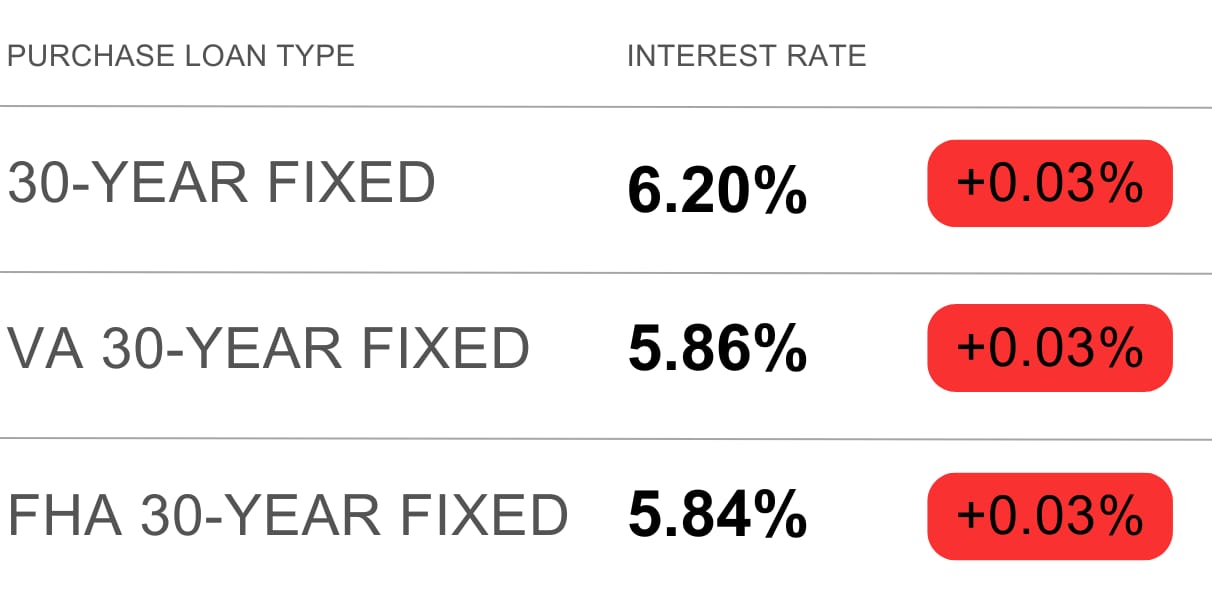
Keep the latest industry data in your back pocket with today’s mortgage rates:
Source: Mortgage News Daily
“You’ve gotta keep control of your time, and you can’t unless you say no. You can’t let people set your agenda in life.” — Warren Buffett
Don’t let events or other people set your agenda. Stay ruthlessly focused on your goals — your time is limited, and you only get one life. Make the most of it. Have a wonderful week. We’ll see you back here on Friday!
- David